




























New windows are a major investment, so choosing the right frame material matters. Homeowners often find themselves comparing vinyl and fiberglass because both offer strong durability, energy performance, and long-term value. But deciding between the two can be tough, especially because they can seem similar at first.
While both materials are widely used, they’re built differently and perform in unique ways depending on your home, climate, and design goals. As you compare your options for a window replacement project, understanding how vinyl vs. fiberglass windows stack up across key categories will help you make a more informed decision for your project.
What Are Vinyl Windows?
Vinyl window frames are made from a compound of PVC (polyvinyl chloride), a durable material with excellent weather resistance and insulation properties, and other components. For example, MILGARD’s vinyl frames include PVC, high quality titanium dioxide, and stabilizers to ensure high performance and energy efficiency. Inside the frame, multiple chambers trap air and slow heat transfer to improve energy efficiency even more.
Because vinyl doesn’t absorb moisture or corrode, it holds up well in humid or rainy environments. Homeowners often choose vinyl for its low maintenance requirements and consistent performance, especially in standard window sizes and configurations.
What Are Fiberglass Windows?
Fiberglass window frames are made by bonding together fine glass fibers and resin to form a long-lasting and weather-resistant frame. The properties of fiberglass frames help them tolerate extreme heat and cold and resist swelling, warping, and rotting.
That stability makes fiberglass a good option for larger or more demanding applications. It’s often used in projects where strength, minimal movement, and long-term durability are top priorities.
Fiberglass vs. Vinyl Windows: Key Differences at a Glance
Before diving into the details, it helps to see how vinyl vs. fiberglass windows compare side by side. The table below highlights some of the most important differences homeowners consider when choosing between these two materials.
| Feature | Vinyl Windows | Fiberglass Windows |
|---|---|---|
| Material | PVC | Glass fibers + resin |
| Strength | Durable for most homes | Extremely strong and stable |
| Maintenance | Low maintenance | Low maintenance |
| Energy Efficiency | Excellent insulation | Very good insulation |
| Expansion/Contraction | Moderate movement | Minimal movement |
| Cost | More affordable | Higher upfront cost |
| Best Use | Standard sizes, budget-conscious projects | Large openings, custom designs |
Below, we’ll dive into each of these features in detail to help you decide which material is right for your project.
Benefits of Vinyl vs. Fiberglass Windows
Ultimately, your choice may come down to the benefits of each type of material. Here’s a quick summary of what to expect from vinyl or fiberglass.
Vinyl Benefits
Vinyl windows are a popular choice for homeowners who want strong performance without a high upfront cost. Key advantages include:
- Excellent insulation
- Lower price point
- Low maintenance requirements
- Wide range of styles and finishes
Fiberglass Window Benefits
Fiberglass windows are often chosen for projects that require added strength and design flexibility. Benefits include:
- High structural strength
- Ideal for large or custom openings
- Paintable frames
- Long-term durability
Structural Strength and Durability
Strength and durability play a big role in how windows perform over time. While both fiberglass and vinyl are built to last, they handle stress, weather, and structural demands in different ways.
Frame Strength
Fiberglass is known for its high tensile strength, which comes from the embedded glass fibers in the frame. Its structure allows it to resist bending and maintain its shape even under heavy loads.
Vinyl frames are engineered for durability as well, often reinforced with internal chambers or metal inserts. Fiberglass holds its shape under heavier loads, while vinyl delivers more than enough strength for most residential window applications.
Resistance to Warping and Temperature-Driven Expansion
Window frames expand in heat and contract in cold. This thermal expansion is a natural reaction to temperature changes, and over time it can wear down seals, cause sticking in summer, and create gaps in winter. Fiberglass window frames are less sensitive to these temperature swings because their expansion coefficient closely matches the glass itself, which reduces thermal stress on the seals and helps the window keep performing through every season.
Vinyl, on the other hand, expands slightly more in extreme heat or cold. Manufacturers design vinyl frames to accommodate this movement, and homeowners can help maximize performance by choosing a reputable professional installation company and keeping seals and weatherstripping in good condition.
Resilient Design and Fire Resistance Impact and Storm Resistance
Fiberglass frames are strong because the glass fibers embedded in the resin create a durable, stable structure that resists bending and cracking. That glass-fiber construction also helps fiberglass tolerate extreme heat far better than vinyl, which is one reason it has become a popular choice for homeowners building or rebuilding in wildfire-prone areas across the West. For families focused on resilient design, fiberglass offers added peace of mind in high-heat conditions.
Vinyl frames are also engineered to perform in demanding conditions, especially when reinforced. Many vinyl windows include:
- Internal structural reinforcements
- Multi-chamber designs for added strength
- Laminated or impact-resistant glass options
Whichever material you choose, pairing it with the right glass package helps create a resilient home that stands up to the elements season after season.
Performance for Large Window Openings
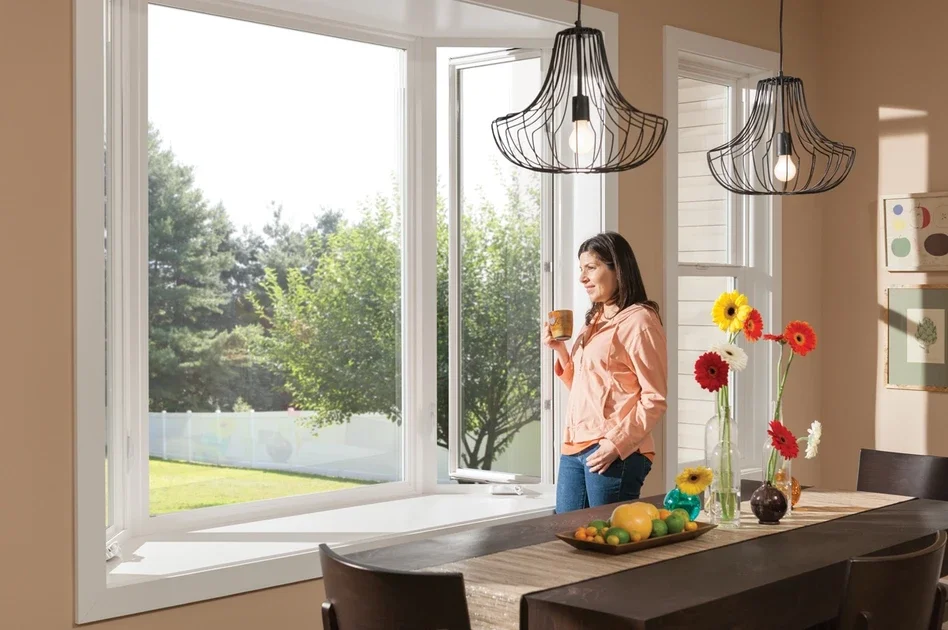
When it comes to large windows, there’s a clear winner between fiberglass windows vs. vinyl: Fiberglass stands out here because it can support heavier glass without needing bulky frames. This makes it ideal for wide picture windows, sliding glass walls, and floor-to-ceiling designs.
However, don’t count out vinyl windows entirely. You can still use vinyl in larger configurations, but it may require additional support, like reinforced meeting rails, thicker frame profiles, or mullions (vertical or horizontal supports between window units).
Frame Profiles, Thickness, and Sightlines
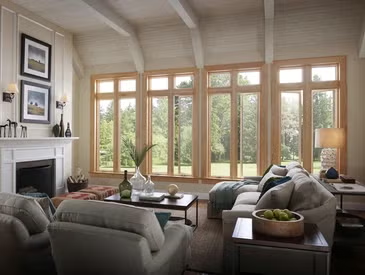
Fiberglass frames tend to be thinner, which allows for more visible glass and cleaner lines. If maximizing views is a priority, fiberglass is the top choice. Its clean lines also give it a more high-end look that’s ideal for luxury properties.
Vinyl frames are slightly thicker because of their internal chamber structure. That added thickness works well in traditional architectural styles, where a slightly wider frame can complement the overall design.
Energy Efficiency
Energy performance is increasingly important to homeowners debating vinyl vs. fiberglass windows. While both support efficient designs, they insulate differently. Plus, you’ll also want to choose the right glass options.
How Vinyl Windows Perform
Vinyl windows can deliver strong energy performance, especially when made with high-quality materials and paired with energy-efficient glass options such as:
- Double- or triple-pane glass
- Argon or krypton gas fills
- Low-E coatings that reflect heat
That said, energy efficiency in vinyl windows depends on the quality of the material and the installation. Vinyl expands and contracts more with temperature fluctuations, so seals may wear down over time if the window isn’t well-built or properly installed. With the right configuration and a top-of-the-line vinyl formula, these windows offer solid, cost-effective efficiency and long-term energy savings for most homes for most homes.
How Fiberglass Windows Perform
Fiberglass windows are typically more energy efficient than vinyl because of their stability and ability to maintain tight seals over time. The frame keeps its shape year-round, which helps prevent air leaks and supports long-term thermal performance.
Homeowners frequently pair fiberglass windows with higher-end glass features such as:
- Triple-pane glass systems
- Krypton gas fills for improved insulation
- Advanced Low-E coatings tailored to climate zones
If you’re really looking for the ultimate energy efficiency, go with a combination of fiberglass frames and the best glass options for your climate.
Condensation and Moisture Buildup on Frames
Condensation forms when warm indoor air meets a cooler surface. Both vinyl and fiberglass resist moisture and are reliable choices in humid environments.
Vinyl frames stay closer to room temperature due to their insulating properties, which can help reduce condensation buildup. Fiberglass frames, while still resistant to moisture and rot, may conduct slightly more temperature from the outside, meaning condensation is more likely to form.
To reduce condensation on any window:
- Use exhaust fans in kitchens and bathrooms
- Maintain indoor humidity levels between 30–50%
- Keep air circulating near windows
- Check seals and weatherstripping regularly
Climate-Specific Performance (Western U.S.)
Western climates vary from coastal and mild to hot inland and cold mountain regions, so window performance depends heavily on the right combination of frame and glass. Vinyl windows work well in many areas thanks to their insulating properties, especially when paired with Low-E coatings to reduce heat gain in warmer zones.
Fiberglass windows are a strong option in areas with extreme temperature fluctuations, since their stability helps maintain a consistent seal. No matter the material, choosing windows that meet ENERGY STAR® requirements for your climate zone can improve comfort and efficiency year-round.
Aesthetics and Design Options
Windows play a major role in the look of your home. For many homeowners, the appearance of fiberglass vs. vinyl windows matters just as much as performance.
Color Options
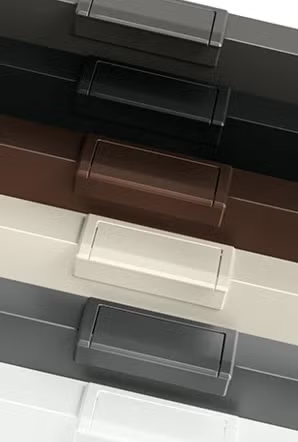
Vinyl windows get their color through durable exterior finishes that are designed to resist fading over time. Colors vary by manufacturer, but MILGARD offers a range of vinyl finishes that are factory-applied for consistency and long-term performance.
Because of how they’re made, fiberglass windows typically don’t have as many color options as vinyl. However, MILGARD offers several fiberglass finishes: Frost, Harmony, Bark, and Black Bean. Each exterior color can be paired with either a white or matching interior, giving homeowners more control over the final look.
Window Style Compatibility
Both materials are available in common window styles, but their performance varies depending on size and complexity. Fiberglass is often preferred for:
- Large picture windows
- Oversized specialty windows
- Curved or arched windows
Vinyl works well for:
- Double-hung and single-hung windows
- Standard sliding and casement windows
- Smaller custom shapes
Architectural Style Suitability
Vinyl windows fit well in a wide range of home styles, including:
- Traditional Colonial homes
- Craftsman-style homes
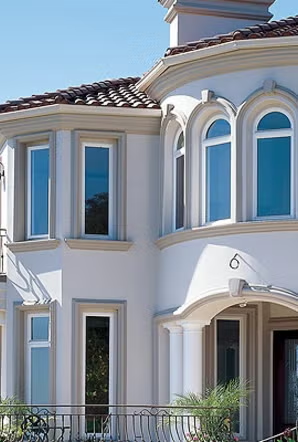
- Spanish and Mediterranean style homes
- Farmhouse designs
Fiberglass windows’ sleek frames are often considered contemporary. However, they can be created with a wood look, which also makes them ideal for historical homes:
- Modern and mid-century modern homes
- Prairie style homes with large picture windows
- Victorian or Tudor style homes
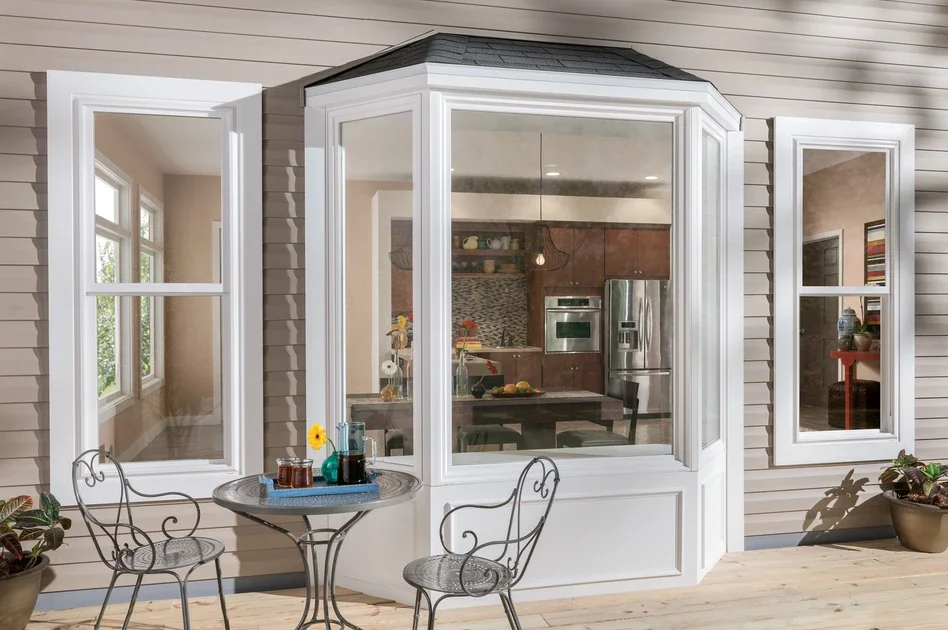
Choosing the right material often comes down to how the frame profile and finish work with your overall design.
Maintenance Requirements
Looking for low-maintenance windows? You may not find much difference between fiberglass vs. vinyl windows. Both are known for being low maintenance, but the way you care for your windows can differ slightly.
Vinyl Window Maintenance
Vinyl windows are one of the easiest options to maintain because the material doesn’t require painting or sealing. The finish is built into the frame, so it won’t peel or chip under normal conditions.
To keep vinyl windows in good shape:
- Clean frames and glass with mild soap and water a few times a year
- Check and clear weep holes to allow proper drainage
- Inspect weatherstripping for wear and replace if needed
- Avoid using abrasive cleaners that could damage the surface
Because vinyl resists moisture and won’t rot or corrode like some traditional wood windows, it performs well in humid or coastal environments with minimal upkeep.
Fiberglass Window Maintenance
Fiberglass windows are also low maintenance, but they may require slightly more attention if they have a painted finish. While the material itself is highly durable, the surface coating can wear over time depending on sun exposure.
To maintain fiberglass windows:
- Clean frames regularly with mild soap and water
- Inspect painted surfaces for fading or wear and touch up as needed
- Check seals and hardware to maintain proper operation
- Keep tracks and moving parts free of debris
Fiberglass holds up well in harsh conditions, but periodic inspections help maintain both appearance and performance over time.
Lifespan and Longevity
Both vinyl and fiberglass windows are built for long-term performance. However, fiberglass windows often have a slight edge in lifespan due to their strength and resistance to expansion and contraction. Because the material remains stable over time, it places less stress on seals and joints, which can help extend the life of the window system.
Vinyl windows also offer excellent longevity, especially when properly installed and maintained. Modern vinyl frames are engineered to handle temperature fluctuations and resist moisture, which helps prevent common issues like warping or rot.
In general:
- Fiberglass windows may last longer in extreme climates or large installations due to their strength and dimensional stability
- Vinyl windows provide long-lasting performance in most standard applications, often lasting decades with minimal maintenance
Both options are designed to deliver reliable performance over time, but fiberglass may be the better choice for homeowners who want maximum durability in demanding conditions. That long-term performance is one reason many manufacturers back both vinyl and fiberglass windows with strong warranty coverage.
Installation Considerations
Proper installation plays a major role in how vinyl and fiberglass windows perform over time. Each material behaves differently during installation, which can affect long-term durability, energy efficiency, and operation.
Installing Vinyl Windows
Vinyl windows are lighter and slightly more flexible, which can make them easier to handle in standard window openings. That flexibility helps during installation, but it also means installers need to leave proper spacing to allow for expansion and contraction.
If vinyl frames are installed too tightly, they may bow or affect how the window opens and closes. A professional installer will account for these movement allowances while still creating a tight, weather-resistant seal.
Installing Fiberglass Windows
Fiberglass windows are heavier and much more dimensionally stable, so they don’t flex during installation. Because of this, the window opening must be precisely measured and prepared: level, square, and properly aligned.
That stability helps the frame maintain its shape over time, but it leaves less room for adjustment during installation. Installers need to be exact with placement and fastening to avoid gaps or stress on the frame.
Best Practices for Both Materials
No matter which material you choose, proper installation techniques are key to long-term performance. A few important steps include:
- Making sure the opening is level, square, and properly flashed
- Using quality insulation and sealants to prevent air and water leaks
- Following manufacturer guidelines for fastening and spacing
- Working with experienced professionals familiar with the material
Taking the time to prepare for your window installation helps protect your investment and keeps your home comfortable year-round.
Which Is Right for You? Decision Guide
Choosing between vinyl and fiberglass windows depends on your priorities, budget, and design goals.
Choose Fiberglass Windows If...
- You want thinner frames and more glass
- You’re installing large or custom windows
- You prefer a premium material
Choose Vinyl Windows If...
- You want a cost-effective option
- You value strong insulation
- You prefer built-in color options
Planning to Sell Your Home?
Energy-efficient windows are one of the most popular home improvement upgrades for improving comfort, efficiency, and buyer appeal. Homes with strong efficiency features can sell for more than similar homes without them. Both vinyl and fiberglass windows can contribute to that value.
MILGARD’s Vinyl and Fiberglass Windows
Once you’ve made your decision regarding vinyl vs. fiberglass windows, you can come to MILGARD for quality options. We offer both vinyl and fiberglass product lines, giving homeowners flexibility when choosing the right material.
Tuscany Series: MILGARD's Core Vinyl Line
The Tuscany Series is our top-of-the-line vinyl window series. These windows are designed for durability, energy efficiency, and low maintenance. They come in seven exterior color options and three interior colors, making them versatile for any project. The Tuscany Series is a strong option for homeowners looking for consistent performance at a more accessible price point.
C700 Ultra Series: MILGARD's Fiberglass Line
The Ultra Series (C700) offers an excellent balance of energy efficiency, durability, and an aesthetically pleasing look, making it a strong option for homeowners who want both long-term reliability and high-end style. With a full lineup of window styles and both swinging and sliding patio doors, the C700 Series makes it easy to create a consistent look throughout your home.
Tuscany vs. C700: Side-by-Side Comparison
When comparing these two lines, it helps to look at how they perform in real-world scenarios:
- Tuscany (Vinyl): More budget-friendly, thicker frames, strong insulation, wide style availability
- C700 (Fiberglass): Thinner frames, higher strength, suited for large or custom windows, more premium positioning
Both options are designed for long-term performance, so the best choice depends on your project needs.
Find a MILGARD Certified Dealer
A certified dealer can help you compare vinyl and fiberglass windows in person and walk you through customization options. They can also help match your selection to your climate, home style, and budget. Find a MILGARD dealer in your area to talk over ideas and visit their showroom.
Frequently Asked Questions
Both can deliver strong energy performance when paired with the right glass. Vinyl has built-in insulating properties, while fiberglass relies more on high-performance glass systems. Either option can meet ENERGY STAR® standards.
Fiberglass may have a longer lifespan due to its strength and resistance to expansion. Vinyl windows can still last for decades with proper installation and care.
Fiberglass windows can be a good investment for large openings or custom designs. Homeowners who want thinner frames and added strength often find the higher cost worthwhile.
Vinyl windows are available in a variety of finishes, including darker colors. While fiberglass may offer slimmer frames, vinyl can still achieve a clean, updated appearance.
Yes, both vinyl and fiberglass windows can qualify when they meet required performance ratings. The final result depends on the full window system, including glass and coatings.